
When someone finds bed bugs, panic often sets in fast. The first instinct is usually to drive to the store, buy a spray, and start treating every visible area of the room. That reaction is understandable, but it can be a costly mistake.
DIY bed bug sprays often fail because bed bugs are not like many other household pests. They hide extremely well, spread easily, and can survive in areas that sprays may never reach. In some cases, spraying can make the infestation harder to eliminate.
Before you spray, here is what homeowners should understand.
Bed Bugs Are Experts at Hiding
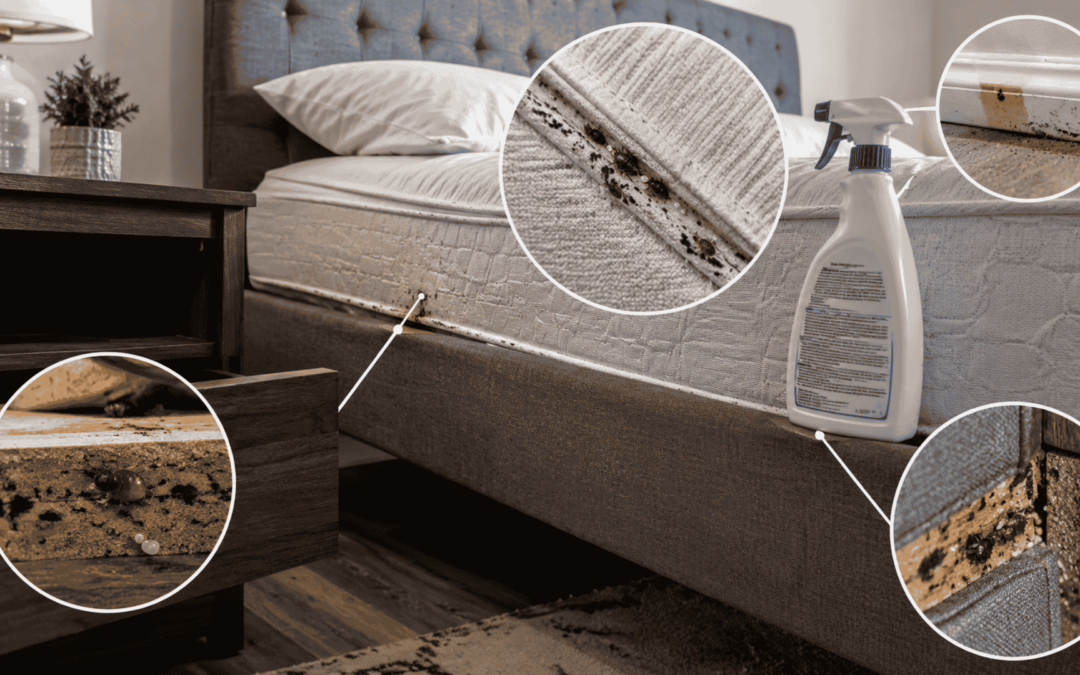
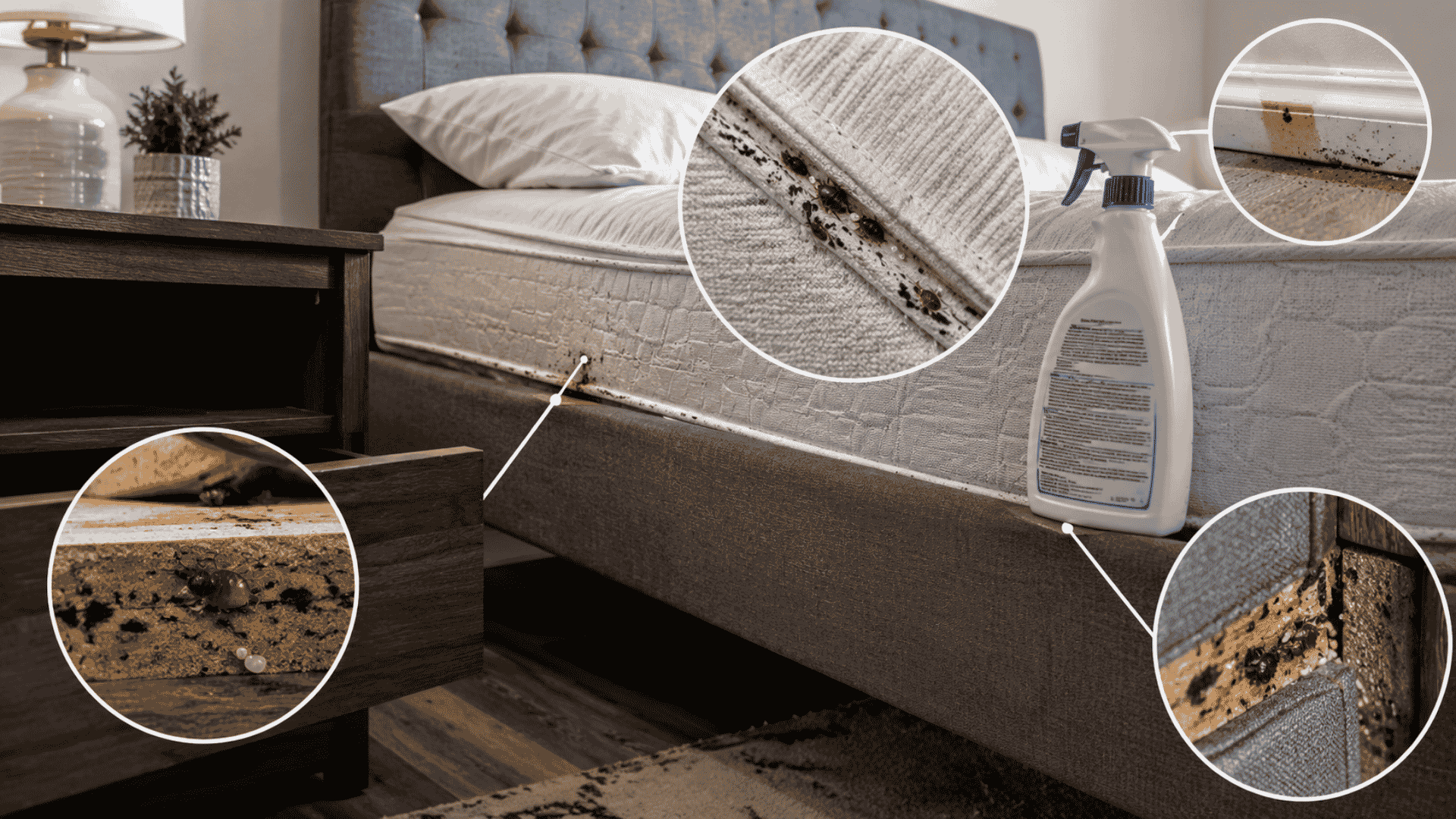
Bed bugs are small, flat, and built to hide in tight spaces. They may live in mattress seams, box springs, headboards, bed frames, baseboards, electrical gaps, furniture joints, curtains, books, luggage, and couches.
A spray only works if it reaches the bug directly or leaves an effective residual in the right place. The problem is that most homeowners do not know where all of the bugs are hiding.
If a spray misses eggs, nymphs, or hidden adults, the infestation will continue.
Sprays May Scatter Bed Bugs
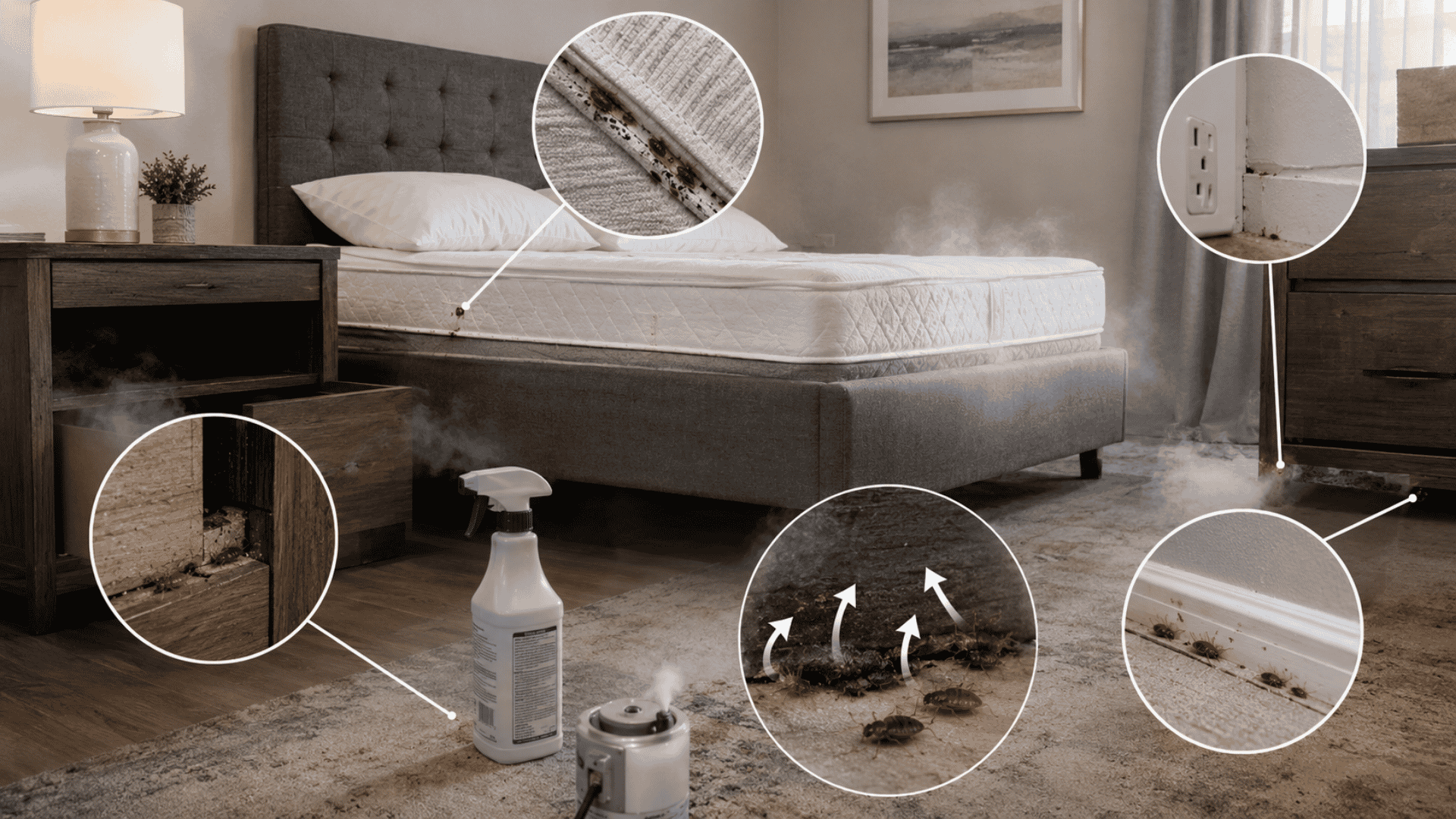
One of the biggest risks of DIY spraying is that it can disturb bed bugs and cause them to move deeper into the home. Instead of staying in one area, bed bugs may retreat into walls, furniture, nearby rooms, closets, or living spaces.
That can turn a localized infestation into a more widespread problem.
This is especially concerning in apartments, duplexes, condos, and multi-family housing where bed bugs may move between units or shared walls.
Foggers Do Not Reach the Right Places
Many people assume a fogger or “bug bomb” will fill the room and eliminate the problem. Unfortunately, bed bugs do not usually sit out in the open. They hide in protected cracks and crevices where foggers will not reach.
Foggers can also create safety risks if they are misused. They should never be treated as a complete bed bug solution.
If bed bugs are hiding in mattress seams, wall voids, baseboards, and furniture joints, a fogger will leave the real infestation untouched.
Visible bugs are usually only part of the problem.
DIY products may affect the bugs you can see, but bed bugs spend much of their time hidden in areas that are difficult for homeowners to fully inspect or treat.
Bed Bug Eggs Are Easy to Miss
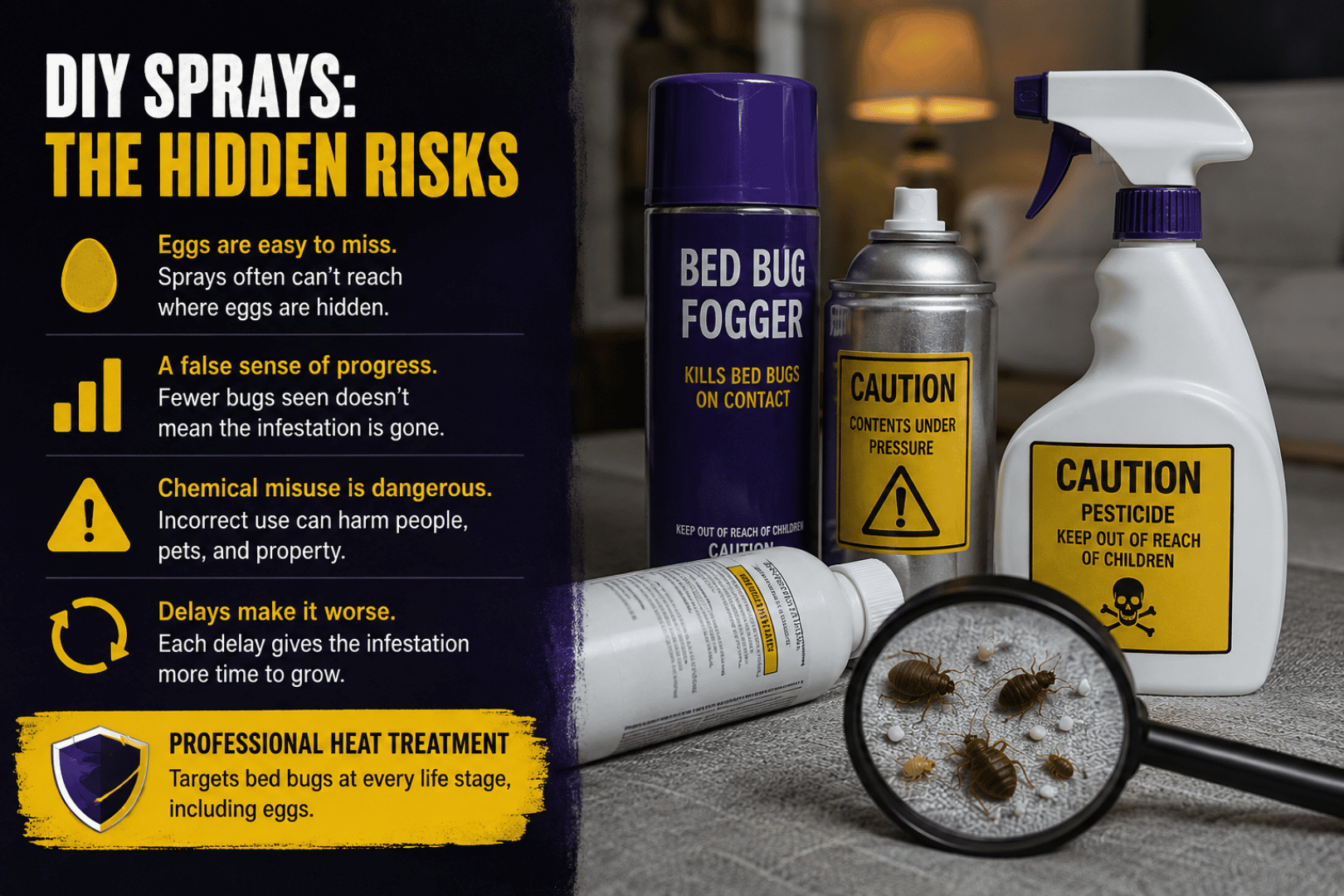
Even if a DIY product kills some adult bed bugs, others are certain to be missed. Eggs are in areas sprays won't reach. Once those eggs hatch, along with the bed bugs that were missed, the infestation will continue to grow.
This is one reason DIY treatments can create a frustrating cycle. The homeowner sprays, sees fewer bugs for a short period, then notices activity again days or weeks later. Each delay gives the infestation more time to grow.
Professional heat treatment is designed to address bed bugs at every life stage, including eggs.
DIY Sprays Can Create a False Sense of Progress
After spraying, a homeowner may see dead bugs and assume the problem is solved. But visible bugs are often only part of the infestation.
Bed bugs spend much of their time hidden. Seeing fewer bugs does not mean the infestation is gone. If hidden bugs or eggs remain, the infestation will rebuild.
This false sense of progress can delay professional treatment until the infestation is more widespread and more stressful.
Chemical Misuse Can Be Dangerous
Using too much pesticide, mixing products, spraying mattresses incorrectly, or applying products in unsafe areas can create risks for people, pets, and property.
Pesticides must be used according to label directions. More product does not mean better results. In fact, overuse can create health and safety concerns without solving the infestation.
This is one of the reasons professional guidance matters.
What Should You Do Instead?
If you suspect bed bugs, the best first step is to schedule a professional inspection. A trained technician can help confirm whether bed bugs are present, determine where the activity is located, and recommend the right treatment plan.
You can also take simple containment steps while waiting for help:
- Avoid moving furniture from room to room.
- Do not sleep in a different room, which may encourage bed bugs to spread.
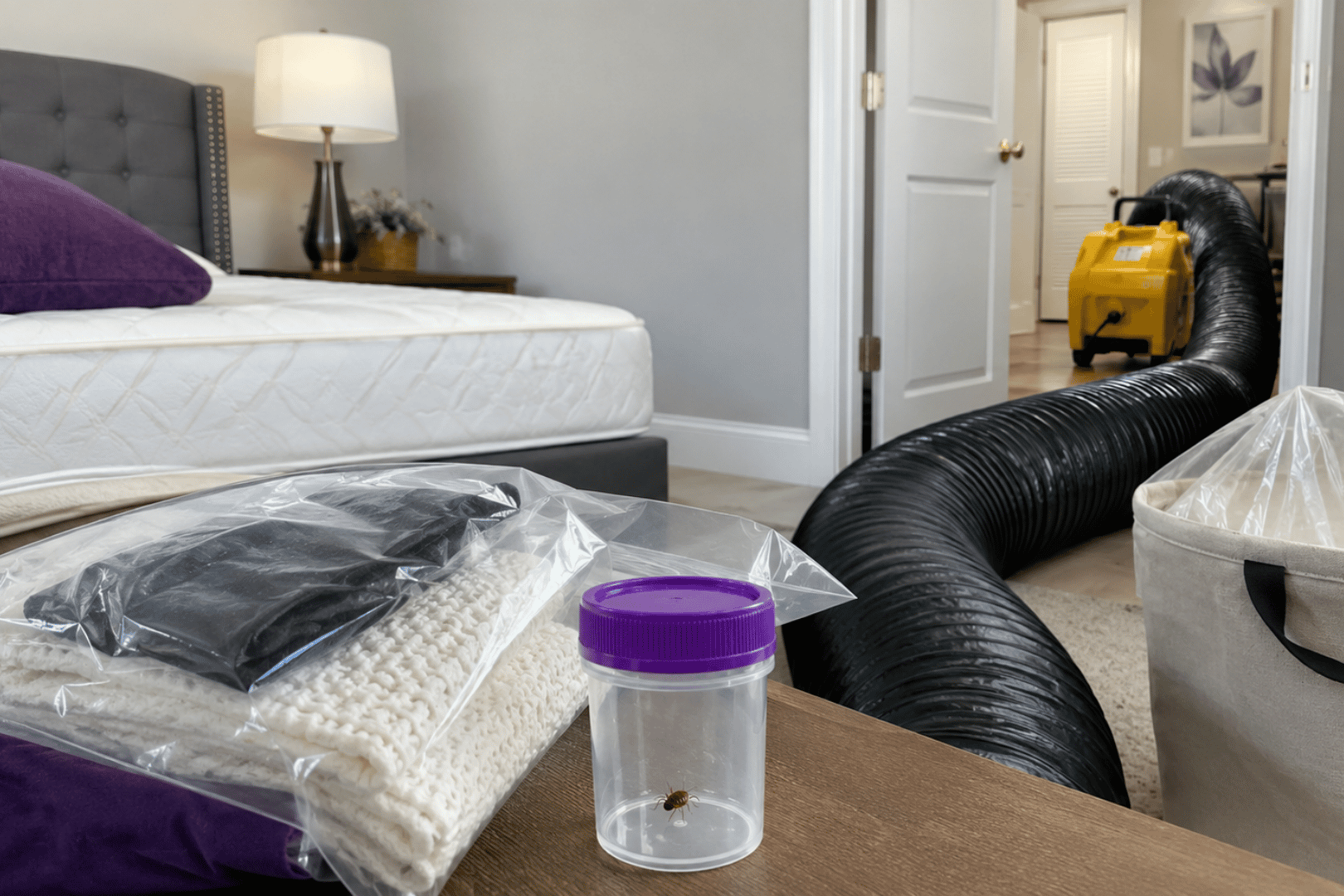
- Save any suspected bugs in a sealed container for identification.
- Avoid applying DIY sprays before the inspection.
- Wash and dry clothing or bedding on hot cycles when appropriate.
The key is to avoid actions that scatter the infestation.
Why Professional Heat Treatment Is Different
Professional bed bug heat treatment does not depend on chasing individual bugs with a spray bottle. Instead, it uses specialized equipment to raise the temperature in the affected area to levels where bed bugs cannot survive.
Heat can move through many of the spaces where bed bugs hide. When performed properly, it can eliminate adults, nymphs, and eggs in a single treatment.
For homeowners who want the fastest, most effective, and chemical-free option, heat treatment is the only way to go.
Call Allphase Before You Spray
Allphase Exterminators specializes in professional bed bug heat treatment, inspections, and canine detection. If you think you have bed bugs, do not make the problem worse with DIY sprays.
Call Allphase Exterminators for a confidential inspection and a professional solution designed to eliminate the infestation properly.