
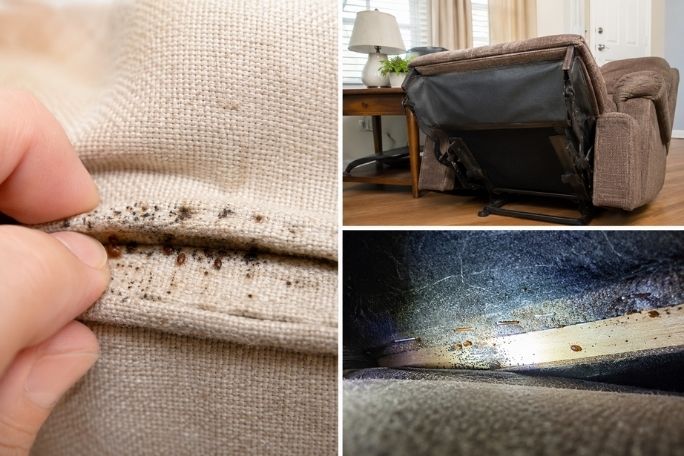
Most people associate bed bugs with mattresses, but beds are not the only place they hide. Bed bugs can live in couches, recliners, chairs, and other living room furniture, especially if people regularly rest or sleep there.
This is one reason bed bug infestations can be so frustrating. A homeowner may treat the mattress or bedroom and still have activity in another part of the home.
If you suspect bed bugs in your couch or living room furniture, here is what you should know.
Why Bed Bugs Hide in Couches
Bed bugs are attracted to areas where people sit, rest, or sleep for extended periods. A couch or recliner can provide the same opportunity as a bed, especially if someone naps there, watches TV late at night, or sleeps on the couch regularly.
Couches also have many hiding places, including:
- Fabric seams
- Cushion piping
- Zippers
- Wood frames
- Stapled fabric underneath
- Recliner mechanisms
- Gaps between cushions
- Throw pillows
- Blankets
Because these areas are dark and protected, bed bugs can remain hidden until the infestation grows.
Signs of Bed Bugs in a Couch
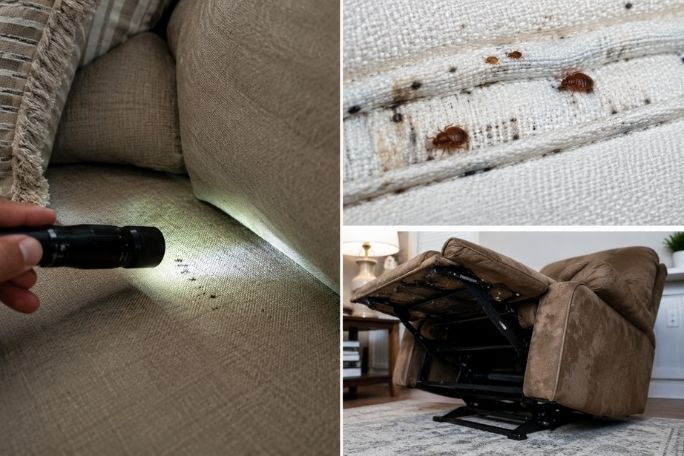
Look for the same evidence you would check for near a bed:
- Live bugs
- Dark stains
- Small blood spots
- Shed skins
- Tiny eggs
- Unexplained bites after sitting or napping
- Musty odor in heavier infestations
Use a flashlight and inspect slowly. Remove cushions if possible and check all seams and folds. Look underneath the couch, especially where fabric is stapled to the frame.
Recliners Can Be Especially Difficult
Recliners can be one of the hardest pieces of furniture to inspect because they have moving parts, interior gaps, and hidden mechanisms. Bed bugs can hide inside the frame, underneath the chair, or in fabric folds that are difficult to reach.
This is one reason professional inspection is so important. What looks clean from the outside may still have hidden activity inside.
How Bed Bugs Spread From the Bedroom to the Living Room
Bed bugs may spread when people move bedding, clothing, pillows, or furniture from one area to another. Bed bugs are also notorious hitchhikers and can be carried on the person throughout the house. They may also move naturally in search of a blood meal.
For example, if someone starts sleeping on the couch to avoid bed bugs in the bedroom, the bugs may follow. This can make the problem worse by spreading activity into another room.
If you suspect bed bugs in one room, do not change sleeping locations without professional guidance.
Do not move rooms to escape bed bugs.
Sleeping on the couch can encourage bed bugs to follow and may spread activity into another area of the home.
Used Furniture Is a Common Risk
Used couches, chairs, mattresses, and recliners can carry bed bugs. Even furniture that looks clean may have hidden activity inside seams or frames.
Before bringing secondhand furniture into your home, inspect it carefully. Be especially cautious with upholstered furniture, items from curbs, online marketplaces, storage units, college housing, or unknown sources.
A free couch can become very expensive if it brings bed bugs into the home.
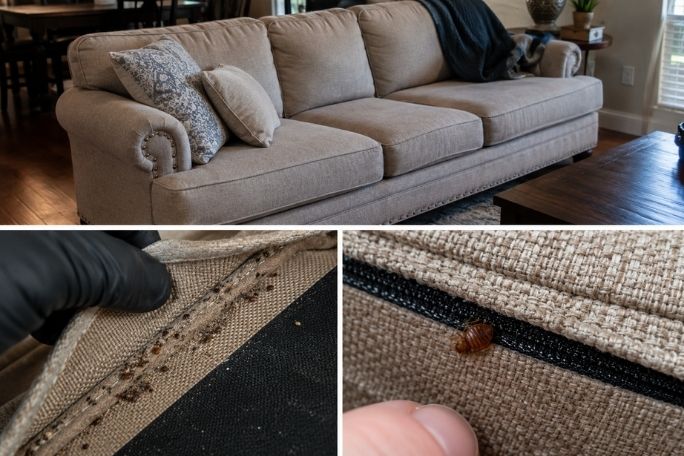
Should You Throw Away the Couch?
Not always. Many homeowners assume they need to throw away infested furniture, but that may not solve the problem. If bed bugs are also in baseboards, carpets, beds, or nearby furniture, removing the couch may only spread the infestation.
Dragging furniture through the home can also drop bugs or eggs along the way.
Before discarding furniture, schedule a professional inspection. A properly performed heat treatment will treat affected furniture as part of the larger solution.
Why Spraying the Couch May Not Work
DIY sprays may not reach deep inside cushions, seams, frames, or recliner mechanisms. Spraying can also drive bed bugs deeper into hiding.
Some products may not be safe for use on surfaces where people sit or sleep. Always be careful with pesticide labels and avoid applying products to furniture without professional guidance.
How Professional Heat Treatment Helps
Professional heat treatment is designed to treat the environment, not just visible surfaces. Because heat can penetrate the areas where bed bugs hide, it is an effective option for furniture-related infestations.
Allphase Exterminators specializes in bed bug heat treatment designed to eliminate bed bugs at all life stages, including bugs hidden in furniture and nearby areas.
Schedule an Inspection for Bed Bugs in Furniture
If you think there may be bed bugs in your couch, recliner, or living room furniture, do not ignore it. The problem may continue to spread if not treated properly.
Contact Allphase Exterminators for a confidential bed bug inspection and professional treatment options.